
Corporate India's credit quality showed a sharp improvement in the second half of FY22, but high input prices and withdrawal of pandemic-related relief measures can pose pressures in the new year, rating agencies said on Friday. Crisil Ratings, which rates a large number of financial sector entities, reported an improvement in the credit ratio -- the number of upgrades to downgrade -- to 5.04 times in the second half of this financial year, from the 2.96 per cent in the first half of the fiscal. It attributed the improvement to a sustained rebound in demand, which lifted revenues of most sectors to pre-pandemic levels and proactive relief measures by the government that cushioned the pandemic blow.

The current capital flight is a short-term phenomenon, the agency said.

Preparing a 'vegetarian thali' got dearer by 34 per cent in July as compared to June because of the soaring tomato prices, an arm of a rating agency said in a report on Monday. A non-vegetarian thali was relatively less impacted and the price of preparing one went up by only 13 per cent, Crisil's 'Roti Rice Rate' report for August said. The inflation in the thalis is largely driven by the 233 per cent jump in tomato prices to Rs 110 per kilogramme in July from Rs 33 in June, the report said.


The agency has predicted that monsoon will also be a major factor.

Amid the political blame game over Bengal's potato ban, which led to shortages in Jharkhand and Odisha, Uttar Pradesh farmers are the unlikely winners.

Led by Trent, which hit its lifetime-high recently, apparel retailers have gained between 10 per cent and 36 per cent over the past three weeks. Given the network of physical stores, these stocks shall be major beneficiaries of the unlock theme, with most states doing away with Covid restrictions. Amid improving footfall, analysts expect the sector to post double-digit growth in FY23.
Crisil Ltd on Tuesday said the Centre's sops to Food Corporation of India including cut in interest rate on bank loans to FCI by 1.5%, will negatively impact the bottom line of public sector banks pulling down pretax-profit by 4.5% in the near term.

Diamond industry expects revenues to drop by 20-25% in the current financial year.

Analysts are divided on their retail price inflation forecast, with some saying the first quarter numbers will overshoot the RBI target by as much as 60 bps while others are softer in their estimate. Consumer price inflation retreated from its 15-month peak of 7.4 per cent in July to 6.8 per cent in August, much lower than the market expectations, despite vegetable prices remaining elevated at 26.1 per cent. Food inflation eased to 9.9 per cent from 11.5 per cent, led by some cooling of inflation in vegetables, cereals, pulses and milk.

Indian banks would require additional Rs 8 lakh crore to meet the minimum capital adequacy under Basel III norms, ratings agency Crisil has said.

The bidding for four spectrum bands is scheduled to start from March 4.

The government on Tuesday proposed reducing the long-term capital gains tax on immovable properties to 12.5 per cent from 20 per cent, but removed the indexation benefits to adjust for inflation, a move experts termed as "negative" for sellers.

If El Nino condition affects the monsoons, as is being forecast by foreign agencies, it can slow down the economy to 5.2 per cent next fiscal from a projected 6 per cent.
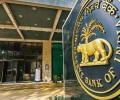
The Reserve Bank may be hitting the end of its tolerance for high inflation and will most likely hike interest rates in the first half of 2022, analysts said on Friday. The central bank will also start rolling back its accommodative policies which have led to easy liquidity conditions, they said. The view from analysts came even as inflation cooled down to 5.6 per cent for July, after two months of breaching the upper end of the RBI's tolerance band of 6 per cent.

Only borrow an amount that can be repaid comfortably. The ratio of total EMI to take-home salary should not exceed 40 per cent.
Public sector Dena Bank is awaiting Crisil rating before deciding on its real estate funding strategy, bank's M V Rao, chief managing director said on Saturday. Upon getting the rating, the bank would disburse at least Rs 50 crore (Rs 500 million) wo

However, a prolonged and intense second wave that curtails oxygen supply to industries for a longer-than-expected period will exacerbate downside risk in affected sectors

A vast majority of borrowers are in the essential services' supply chain with tiny and micro businesses, and this has sprung back.

The cost of a representative home-cooked vegetarian thali has witnessed a 5 per cent on-year increase in January, while that of the non-veg thali declined 13 per cent, a report said on Wednesday. According to Crisil Market Intelligence and Analytics (MI&A) Research 'Rice Roti Rate' estimates, the rise in prices of ingredients like pulses, rice, onion and tomato made home-cooked veg thali costlier in January, while decline in poultry rates helped in the fall in non-veg thali rates.

The average cost of a vegetarian thali became dearer by 10 per cent in June due to the jump in onion, potato, and tomato prices, a report said on Friday. However, a decline in the broiler price contributed to a decrease in the cost of a non-vegetarian meal, as per Crisil Market Intelligence and Analysis' monthly "Roti Rice Rate" report. The cost of veg thali, which comprises roti, vegetables (onions, tomatoes and potatoes), rice, dal, curd and salad, increased 10 per cent to Rs 29.4 per plate in June from Rs 26.7 in the year-ago period, and was higher when compared to Rs 27.8 in May 2024, it said.

Vedanta group chairman, Anil Agarwal, 69, is well known for his business journey from a scrap dealer from Bihar to a London-based globe-girdling metal and oil and gas conglomerate with revenues of $19 billion. Now his abilities to keep his group from over-leveraging itself will be put to the test. Over the years, Agarwal, now based in London, set up the conglomerate via acquiring iron ore producer Sesa Goa, Cairn's oil producing assets in India, and Electrosteel Steel.
Following the footsteps of ICRA and CRISIL on rating corporate governance, credit rating agency Fitch will also take up such an exercise soon.

Global rating agency S&P on Tuesday said even though the US and the Euro zone are headed to recession, India is unlikely to face the impact given the "not so coupled" nature of its economy with the global economy. "Indian economy is a lot decoupled from the global economy than we normally think of, given its large domestic demand, even though you (India) are a net importer of energy. "But you have enough forex reserves on one hand and your companies have managed to maintain healthy balance sheets," Paul F Gruenwald, S&P global chief economist and managing director, told reporters in Mumbai.

On the fiscal deficit front, its president for research flagged concerns over the revenue collections from the taxation front and also about the government not being able to achieve its Rs 40,000-crore (Rs 400-billion) divestment target.
Economy is slated to grow by 7.1 per cent this fiscal after the excellent monsoon although fiscal deficit may overshoot the target, credit rating agency Crisil said on Monday.
McGraw-Hill and S&P India on Monday revised upwards their offer price by about 14 per cent to Rs 775 per share to acquire up to 65.57 per cent stake in credit rating agency Crisil.\n\n

During 2023, the Indian real estate sector - both housing and commercial - witnessed buoyancy fuelled by demand, supply, and absorption, and the sector is banking on the upcoming Budget to keep the momentum going. Mumbai-based Sattva Group wants the government to focus on the critical pillars for long-term growth. The company emphasised on the infrastructure boom with increased allocation, lower goods and services tax (GST) rates, incentives for affordable housing and single-window clearance to fast-track projects and support liquidity.

According to the report, export-oriented sectors like IT services, pharmaceuticals and textiles will, in aggregate, report EBITDA margin expansion of nearly 100 bps, while margin is likely to decline by about 50 bps for other sectors during this period.

The duty hike on cigarettes by 16 per cent announced in the Union Budget 2023-24 would have a nominal impact of around 7-12 paise per stick across cigarette categories, according to experts. This upward revision in National Calamity Contingent Duty (NCCD) would have negligible impact on smokers and the companies could easily absorb the shock as it may not also have any resultant impact on margins, they said. Finance Minister Nirmala Sitharama in the Union Budget for 2023-24 on Wednesday proposed to revise and increase the duty on cigarettes to about 16 per cent.

While sales in the domestic market declined 4.2 per cent during the April-July period, exports grew steadily at 9.5 per cent during the same period.

Mukesh Ambani-led company will squeeze market shares and margins of existing players
Crisil reaffirmed its 'AAA' rating, which reflects the highest degree of safety with regard to timely payment of financial obligations, on the bank's Upper Tier II bonds, Tier I Perpetual bonds and bonds/debentures. Crisil expects the bank's market position to remain strong despite moderating advances growth, because of the 580 new branches it is likely to add in 2009-10, and its wide presence across segments.

CRAs are getting more business than they were getting a year ago. This could indicate expectations that investment demand will rise in the mid-term, says Devangshu Datta.

FMPs remain an option for investors who believe interest rates could head downward over time and wish to lock in the current rates. TMFs have very low expense ratios, which makes them cost-efficient.
The rupee has depreciated by over 12 per cent since the beginning of the fiscal.

In December 2010, Mumbai-based Narsee Monjee Institute of Management Studies received an A*** grading by credit rating agency Crisil.

A rate hike will set back the recovery process, but if RBI does raise rates, it will be to prevent the rise in food prices from spilling over to other sectors and to dampen inflationary expectations.

Falling core inflation on the back of slowing economic growth is likely to create space for the Reserve Bank to ease monetary policy in the early part of the next year, rating agency Crisil said.
